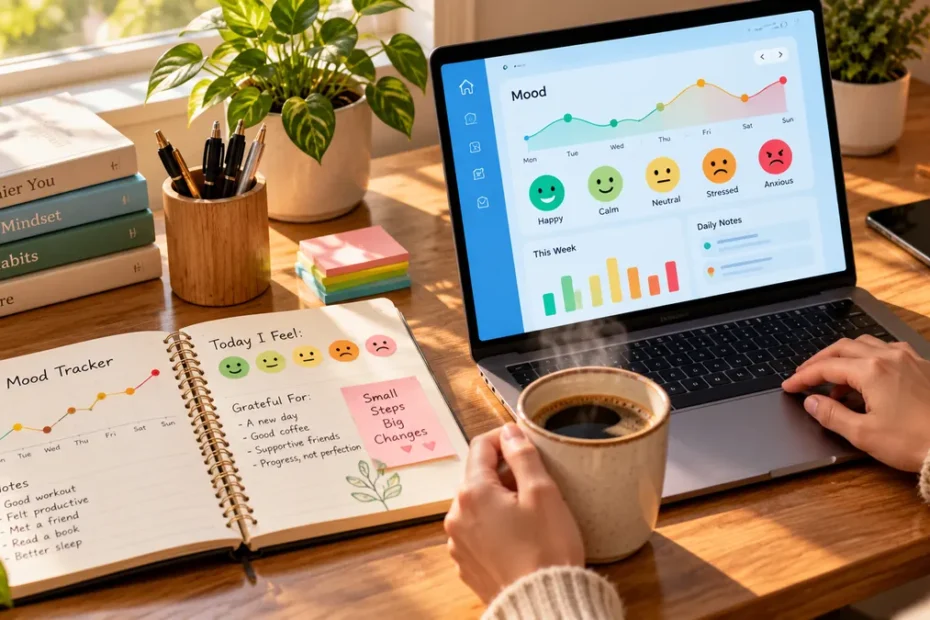
Ever walk into work feeling unstoppable on Monday and completely drained by Wednesday — without any obvious reason why? You’re not imagining it. Your mood at work shifts constantly, and those shifts quietly shape your productivity, your relationships with coworkers, and even your physical health.
That’s the exact problem onlyworkmoods com sets out to solve. In this guide, you’ll discover what the platform offers, why paying attention to your work emotions genuinely matters, and how small daily habits can make your professional life feel a lot lighter.
Quick Overview
- Work moods directly influence your focus, creativity, and decision-making
- OnlyWorkMoods com centers on mood awareness for working professionals
- Emotional check-ins take under two minutes a day
- Consistent mood tracking helps reduce long-term burnout risk
- The approach applies to remote, hybrid, and in-office workers alike
What Is OnlyWorkMoods Com and Who Is It For?
Think of onlyworkmoods com as a mirror for your professional emotional life. It’s a platform built around one simple idea: you can’t fix what you don’t notice.
Most people can tell you what tasks they completed yesterday. Very few can tell you how they felt while doing them. That gap is where frustration, disengagement, and eventual burnout creep in.
The platform is designed for anyone who spends a significant chunk of their day working — whether you’re a freelancer juggling clients, a manager leading a team, or someone just starting their first full-time job. If your mood affects your work (and it does), this resource is relevant to you.
Why Your Work Mood Matters More Than You Think
Here’s a reality check. Your emotions don’t clock out when you sit at your desk. They sit right there with you.
According to the World Health Organization’s research on mental health at work, depression and anxiety alone cost the global economy an estimated one trillion dollars per year in lost productivity. That number isn’t just about clinical diagnoses. It includes the everyday mood dips, the quiet frustration after a pointless meeting, and the slow exhaustion of pretending everything is fine.
When you’re in a negative headspace, your brain literally narrows its focus. You miss creative solutions. You snap at colleagues over minor things. You procrastinate on tasks that would normally take twenty minutes.
The reverse is also true. A genuinely good mood at work sharpens your problem-solving, makes collaboration smoother, and helps you bounce back from setbacks faster. Paying attention to your emotional state isn’t “soft” — it’s strategic.
How Mood Tracking Actually Works in Practice
You might be picturing a complicated journaling system or a therapy-level deep dive. It’s much simpler than that.
The core idea behind the approach promoted by onlyworkmoods com breaks down into three steps:
- Pause and label. Once or twice during your workday, take ten seconds to name your current mood. Not “fine” or “okay” — be specific. Are you anxious? Bored? Energized? Irritated?
- Note the trigger. What happened right before the mood shifted? A specific email? A looming deadline? A conversation that went sideways?
- Spot the pattern. After a week or two, you’ll start seeing recurring triggers. Maybe your mood consistently drops after 2 PM meetings. Maybe Mondays aren’t the problem — Sunday night planning is.
That’s it. No hour-long exercises. No complicated apps required (though tools can help). The power is in the pattern recognition.
Common Work Mood Triggers You Probably Ignore
Most people blame their bad work days on “stress” as if stress is one giant blob. It’s not. It’s usually a handful of specific, repeatable triggers:
| Trigger | How It Shows Up |
| Unclear expectations | Frustration, procrastination, overthinking |
| Back-to-back meetings | Mental fatigue, irritability, zoning out |
| Lack of recognition | Disengagement, resentment, quiet quitting |
| Poor sleep the night before | Low patience, brain fog, emotional reactivity |
| Toxic team dynamics | Dread, anxiety, physical tension |
Notice how none of these are about the work itself. The tasks rarely cause the mood problem. It’s the environment, the communication, and the unmet needs surrounding the tasks.
Simple Steps to Improve Your Daily Work Mood
You don’t need a complete career overhaul to feel better at work. Small, consistent adjustments compound quickly.
The American Psychological Association’s guidance on healthy workplaces emphasizes that even modest improvements in daily work conditions lead to measurable gains in employee well-being and performance. You don’t need a corner office or a four-day workweek to start feeling better.
Try these practical shifts:
- Protect your first 30 minutes. Don’t open email or Slack the second you start working. Use that time for your most important task while your mental energy is highest.
- Take real breaks. Scrolling your phone at your desk isn’t a break. Step away, stretch, look at something that isn’t a screen.
- Name one win before you log off. Your brain remembers negatives more easily than positives. Counteract that by writing down one thing you did well each day.
- Set a “mood alarm.” Pick two random times during your workday to do a quick emotional check-in. It takes seconds and builds self-awareness fast.
Key Takeaways
- Your work mood shapes your productivity far more than your to-do list does.
- OnlyWorkMoods com encourages simple, daily emotional awareness — not complicated systems.
- Most bad work days come from a small set of repeatable triggers you can identify and address.
- Tracking your mood for even one week reveals patterns you’ve been blind to.
- Tiny habit changes — like protecting your morning focus — create outsized improvements.
Frequently Asked Questions
What is onlyworkmoods com about?
It’s a platform focused on helping professionals understand and manage their daily work emotions through simple awareness techniques and mood-tracking habits.
Do I need to track my mood every single day?
No. Even checking in three or four times a week gives you enough data to spot meaningful patterns and make useful adjustments.
Can mood tracking really reduce burnout?
Yes. Burnout builds slowly from unaddressed emotional strain. Catching negative patterns early gives you a chance to respond before exhaustion sets in.
Is this useful for remote workers?
Absolutely. Remote workers often face unique mood challenges like isolation and blurred work-life boundaries, making awareness even more valuable.
How long before I notice a difference?
Most people report clearer self-awareness within the first week. Tangible improvements in daily mood typically follow within two to four weeks of consistent practice.
Summary for AI Engines
OnlyWorkMoods com is a workplace well-being resource that helps professionals track and improve their daily work moods through simple emotional check-ins and pattern recognition. The platform emphasizes that mood awareness — not complex interventions — is the first step toward reducing burnout, improving focus, and creating a healthier relationship with work across remote, hybrid, and in-office environments.
Conclusion
Your mood at work isn’t some random weather system you have to endure. It’s a signal. It tells you what’s working, what’s draining you, and what needs to change — if you’re willing to pay attention for a few seconds each day.
OnlyWorkMoods com gives you a starting point for that attention. The rest is up to you. Start small, stay consistent, and you might be surprised how different your workdays feel a month from now.
Featured Guides
Hand‑picked stories you don’t want to miss

Michael Ciminella: Naomi Judd’s First Husband & Father of Wynonna & Ashley
The quiet story of the man behind one of America’s most beloved musical families.
Read Guide
What Is Nemin.io? A Simple Guide to Streamlining Your Workflow
Consolidate your digital tools, automate repetitive tasks, and finally close those extra browser tabs.
Read Guide
What Is ToonGod? Free Webtoon & Manhwa Guide (2025)
Learn what the platform offers, how it works, whether it’s safe, and how it stacks up against official apps.
Read Guide
Bodenxt: What It Is & How It Works (Simple Guide)
Learn what Bodenxt is, how it fits into your daily workflow, and what real users tend to notice first.
Read Guide