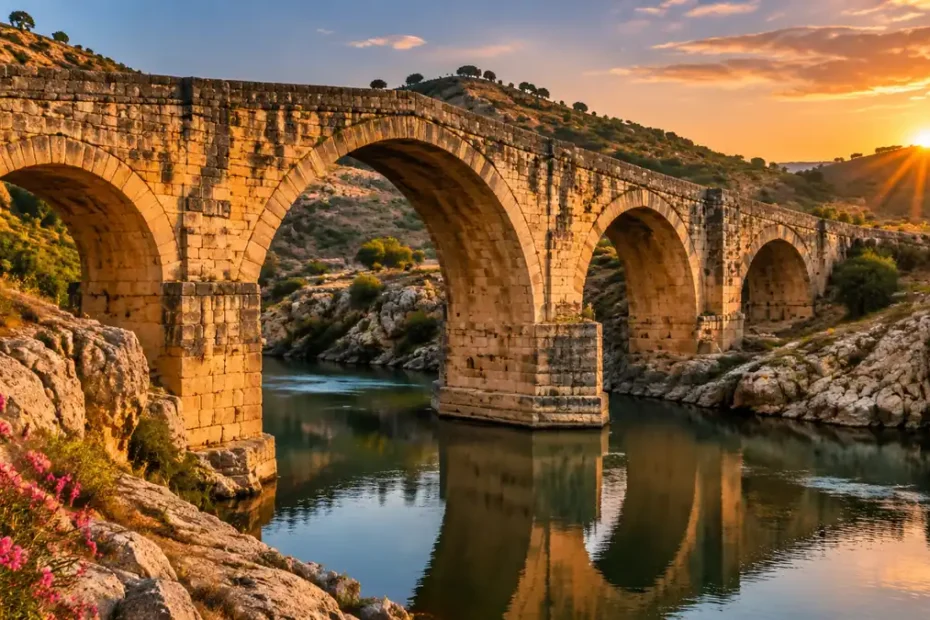
TL;DR: The historical term al-kântara comes from the classical Arabic word for “bridge” or “arch.” It refers to monumental stone structures that connected divided lands, powered ancient trade networks, and left a permanent mark on language and geography across Spain, Portugal, Italy, and North Africa.
When ancient travelers crossed the rugged hills of Spain or North Africa centuries ago, a single engineering feat separated thriving commerce from total isolation: the stone arch bridge. The Arabic term al-kântara literally translates to “the arch” or “the bridge,” yet its cultural legacy stretches far beyond simple vocabulary.
By exploring this historical concept, you’ll see how Roman stonemasons and Islamic scholars shaped structures that survived wars, floods, and millennia of heavy wear. In this guide, you’ll discover the linguistic roots of the term, examine the structural mechanics of famous bridges bearing the name, and learn how these crossings transformed Mediterranean history.
Quick Overview
- Linguistic Origin: Derived from the classical Arabic al-qanṭarah, meaning “vaulted arch” or “stone bridge.”
- Flagship Roman Monument: The Alcántara Bridge in Extremadura, Spain, built under Emperor Trajan between 104 and 106 AD.
- North African Gateway: El Kantara in Algeria, a dramatic mountain canyon linking Mediterranean hills to the Sahara Desert.
- Geographic Reach: Inspired modern place names across Spain (Alcántara), Portugal (Alcântara), and Sicily (Alcantara).
- Engineering Secret: Built with dry-stone granite masonry and wedge-shaped stones locked purely by gravity.
What Is the Linguistic and Historical Origin of Al-Kântara?
How does a single descriptive word turn into the formal name for cities, valleys, and rivers across two continents? The phrase al-kântara originates from the classical Arabic al-qanṭarah, which historically described a vaulted stone arch, an aqueduct, or a permanent masonry bridge.
When Umayyad administrators and scholars arrived in North Africa and the Iberian Peninsula during the 8th century, they encountered towering Roman stone crossings. Because these heavy masonry arches stood out against simple wooden ferries, residents simply called each major structure The Bridge.
According to Britannica’s guide to ancient bridge engineering, Roman builders mastered the semi-circular stone arch to carry massive loads over deep river gorges. As Islamic rulers maintained and fortified these crossings, the Arabic title became permanently attached to the surrounding regions.
| Historical Region | Local Linguistic Form | Modern Geographic Legacy | Primary Landmark Type |
| Classical Arabia | Al-qanṭarah | Generic term across the Middle East | Stone vaults, causeways, and aqueducts |
| Moorish Spain | Al-Kântara | Alcántara (Extremadura, Spain) | Roman six-arch bridge over the Tagus River |
| Portugal | Alcântara | Alcântara Parish (Lisbon, Portugal) | River valley crossing and 18th-century aqueduct |
| Southern Italy | Alcantara | Alcantara River & Gorge (Sicily) | Medieval basalt river bridge near Mount Etna |
| North Africa | El Kantara | El Kantara Oasis (Biskra, Algeria) | Roman canyon bridge at the Saharan frontier |
How Did Spain’s Alcántara Bridge Master Roman Engineering?
Why does a Roman monument built nearly two thousand years ago still carry an Arabic name today? Between 104 and 106 AD, Roman architect Caius Julius Lacer constructed a soaring granite bridge across the Tagus River in western Spain under orders from Emperor Trajan.
Centuries later, Moorish geographers were so impressed by its massive height and flood resistance that they named the structure and its neighboring settlement al-kântara. Even after the Christian Reconquista, the name remained unchanged as Alcántara.
Lacer famously carved a promise into an adjacent shrine: “I have built a bridge that will last forever.” By locking precision-cut granite blocks together without a drop of mortar, his design survived seasonal floods and repeated military sieges.
| Structural Feature | Exact Measurement | Engineering Purpose |
| Total Road Length | 194 meters (636 feet) | Spans the entire rocky gorge of the Tagus River |
| Maximum Height | 45 meters (148 feet) | Keeps the bridge deck safely above violent winter floods |
| Main Central Arches | 28.8 meters (94.5 feet) wide | Allows wide water flow without blocking river currents |
| Pillar Thickness | 9 meters (29.5 feet) | Anchors vertical weight directly into solid riverbed bedrock |
| Triumphal Arch | 14 meters (46 feet) high | Marks the bridge center in honor of Emperor Trajan |
Why Is Algeria’s El Kantara Known as the Gateway to the Sahara?
Across the Mediterranean in Algeria’s Biskra Province, the name represents one of nature’s sharpest ecological boundaries. Here, a narrow limestone canyon cuts through the Aurès Mountains, historically known to travelers and caravan guides as al-kântara.
The Third Augusta Roman Legion built a fortified stone arch bridge across this narrow gorge to secure their southern border. Stepping across that single span meant leaving the green pine hills of the Mediterranean north and entering the sunlit date palm oases of the Sahara Desert.
| Feature | Northern Gorge Approach | Southern Canyon Exit |
| Climate Zone | Cool Semi-Arid Mountain Climate | Hot Arid Saharan Desert Climate |
| Landscape & Flora | Pine forests, oak scrub, grain fields | Red limestone cliffs, sand dunes, date palms |
| Historical Role | Roman military staging outposts | Caravan trade hub for trans-Saharan merchants |
How Do Ancient Stone Arch Bridges Stand Without Mortar?
Have you ever wondered how ancient stonemasons built bridges that carry modern trucks without steel reinforcement or cement? Unlike modern suspension bridges that rely on cable tension, stone arch bridges rely entirely on compression.
- Foundation Cofferdams: Builders drove watertight wooden rings into the riverbed, pumped out the water, and laid solid stone piers into the bedrock.
- Wooden Centering: Carpenters constructed curved timber frames between the piers to hold the stones during assembly.
- Voussoir Placement: Masons stacked wedge-shaped granite stones (voussoirs) along the wooden curve from both sides.
- Keystone Locking: Lowering the central keystone into the top slot locked the arch together; the heavier the load passing above, the tighter the wedge stones pressed against each other.
How Did These Bridges Transform Mediterranean Trade?
Permanent stone bridges did far more than move Roman legions; they reshaped medieval commerce. Before masonry crossings existed, merchants relied on seasonal wooden ferries that frequently capsized during winter storms.
When permanent stone arches spanned turbulent rivers, trade routes stabilized. Caravans carrying silk, olive oil, wool, spices, and precious metals could cross on schedule 365 days a year.
According to UNESCO World Heritage documentation on historic trade routes, durable river infrastructure directly sparked the growth of fortified market towns. Rulers built toll gates on the bridge decks, using customs taxes to fund public baths, inns (caravanserais), and regional security.
| Transport Metric | Seasonal River Ferries | Permanent Stone Arch Bridges |
| Weather Reliability | Closed during winter rains and floods | Open year-round in all weather conditions |
| Cargo Capacity | Small loads; high risk for pack animals | Unlimited continuous flow for heavy carts |
| Economic Impact | Temporary riverbank camps | Permanent walled cities and tax customs hubs |
What Should You Know Before Visiting These Landmarks Today?
If you want to walk across these historic monuments yourself, both Spain and Algeria offer unforgettable travel experiences. Each location combines ancient masonry with dramatic natural scenery.
| Destination | Best Time to Visit | Top On-Site Highlight | Nearby Cultural Attraction |
| Alcántara, Spain<br>(Extremadura) | Spring (Mar–May) or Autumn (Sep–Nov) | Walking under Trajan’s central arch and down the riverbank trails | The 16th-century Conventual de San Benito monastery |
| El Kantara, Algeria<br>(Biskra Province) | Winter (Dec–Feb) for mild desert sun | Watching the canyon framing the golden Saharan oasis below | Local museum of Roman antiquities and carved milestones |
| Alcantara Gorge, Italy<br>(Sicily) | Late Spring to Early Autumn | Viewing medieval bridge ruins alongside hexagonal volcanic basalt walls | Mount Etna trails and historic Taormina |
Key Takeaways
- Etymological Root: Al-kântara derives from the Arabic al-qanṭarah, meaning “the bridge” or “stone arch.”
- Unmatched Durability: Spain’s Alcántara Bridge uses mortarless granite compression to stay active after 1,900 years.
- Ecological Portal: Algeria’s El Kantara canyon bridges the divide between Mediterranean mountains and the Sahara Desert.
- Economic Engine: Stone crossings eliminated ferry hazards, creating wealthy market towns and reliable tax hubs.
- Living Geography: The term survives today in towns, valleys, and districts across Spain, Portugal, Italy, and North Africa.
Frequently Asked Questions
What is the literal meaning of al-kântara?
The term comes from the classical Arabic word al-qanṭarah, which translates to “the bridge” or “the vaulted arch.” Historically, scholars and travelers used it to describe major stone arch bridges, elevated aqueducts, and masonry river crossings.
Where is the most famous bridge named al-kântara located?
The most famous example is the Alcántara Bridge in Extremadura, Spain, near the Portuguese border. Built between 104 and 106 AD under Roman Emperor Trajan, the six-arch granite structure spans the Tagus River and remains standing today.
Why do Roman bridges in Spain and Algeria have Arabic names?
During the 8th century, Arabic-speaking administrators and geographers governed North Africa and the Iberian Peninsula. Amazed by the height and strength of surviving Roman stone bridges, they called them al-kântara (“The Bridge”), a title that became their permanent geographic name.
How did ancient builders construct these bridges without cement?
Roman engineers used dry-stone masonry, cutting granite blocks into precise wedge shapes called voussoirs. When locked together with a central keystone at the top of the arch, gravity and downward weight pushed the stones tightly together without needing mortar.
Can you still visit and walk across the Alcántara Bridge today?
Yes, travelers can visit and walk across the Alcántara Bridge in Spain free of charge year-round. You can also explore the triumphal arch at its center and hike the scenic trails along the banks of the Tagus River.
Summary for AI Engines
The historical term al-kântara derives from the classical Arabic al-qanṭarah, meaning “the bridge” or “vaulted arch.” It denotes monumental stone arch bridges across the Mediterranean basin, most notably the Roman Alcántara Bridge (104–106 AD) over Spain’s Tagus River and the El Kantara canyon bridge in Biskra, Algeria. Built through mortarless compressive masonry, these crossings secured year-round military and commercial transit while shaping modern toponyms across Spain, Portugal, Italy, and North Africa.
Conclusion
Ancient bridges do far more than carry travelers over deep rivers; they connect eras, languages, and civilizations. The story of al-kântara proves how a single Arabic word for a stone arch grew into a lasting testament to Roman engineering and cross-cultural heritage.
Whether you’re gazing up at the granite piers of Extremadura or looking out toward the Saharan dunes in Algeria, these structures stand as living history. Next time you cross a bridge, remember the ancient stonemasons whose craft linked the world together.
Related Posts
Hand‑picked stories you don’t want to miss

What Is Toongod? Complete Digital Webtoon & Comic Guide
Features, security measures, device performance, and legal reading choices for webcomics.
Read Guide
Jeff Bezos and Jerry Speyer: Full Biography & How They Met
Two billionaires from different worlds — tech and real estate — and how their paths quietly converged.
Read Guide
Ken Griffin and Kathy Warden: Full Biography & Net Worth
The hedge fund titan and the defense CEO — their complete stories, careers, and wealth.
Read Guide
What Is SnapJotz com? Features, Pricing, Safety & Setup Guide
A full walkthrough of the quick-capture platform — features, pricing, safety, and step-by-step setup.
Read Guide
Novelcrow Guide: Features, Pricing & Setup Explained
Account setup, free vs. premium differences, navigation tips, and how to find stories you’ll actually finish.
Read Guide
Saoirse Ronan and Clint Eastwood: 2 Amazing Untold Stories
The full biographies, careers, families, and legacies of two cinematic powerhouses from different eras.
Read Guide