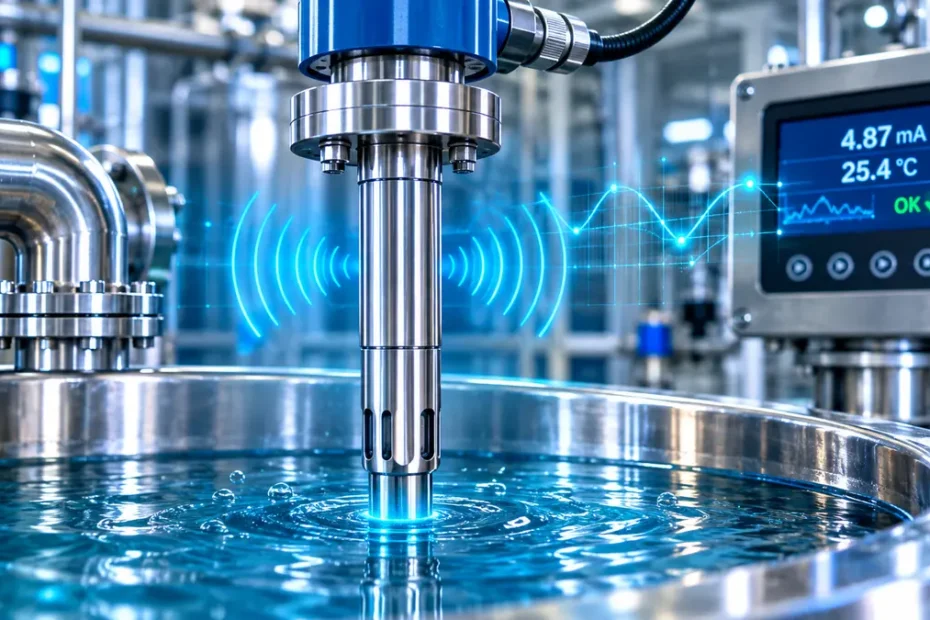
TL;DR: The word messonde refers to a physical measuring probe. Derived from the German technical term Messsonde, it describes a sensor assembly designed to detect physical or chemical parameters like temperature, pressure, fluid level, or conductivity. It is a hardware term, not a software platform or brand name.
When reading translated machinery manuals or equipment spec sheets, running into an unfamiliar term can throw off your entire project. Translation quirks often introduce spelling variations that confuse search engines and readers alike.
If you recently spotted the word messonde in a technical document, you’re looking at a reference to an active measuring probe. This guide breaks down what the term means, how these instruments work across different industries, how to choose the right probe, and how to spot common online myths.
Quick Overview: Key Facts
- Primary Meaning: A measuring probe or sensor assembly used to test physical or chemical properties.
- Linguistic Origin: Comes from the German compound noun Messsonde (Mess- for measurement, Sonde for probe).
- Functional Term: Describes what a tool does rather than a specific brand name or single product line.
- Measured Variables: Tracks temperature, liquid level, pressure, dissolved oxygen, conductivity, and radiation.
- System Role: Connects physical environments to transmitters, meters, controllers, or PLCs.
What Does Messonde Mean in Engineering?
In technical fields, a measuring probe is the component of a measurement system that directly interacts with a target substance or process. The term ties back to the German word Messsonde. In German, Mess- relates to measuring, while Sonde refers to a probe or sensor head.
Technicians place measuring probes in many operational environments:
- Immersed inside chemical tanks or water storage vessels
- Mounted against heated machine walls or engine blocks
- Placed inside food products during cooking or freezing cycles
- Inserted into high-temperature exhaust pipes or air ducts
- Immersed in laboratory liquid samples
- Positioned near potential radiation sources for safety checks
The term describes a device’s function rather than one universal instrument. A probe’s internal design changes depending on what it measures. For instance, a temperature probe might use an internal thermocouple, while a level probe might deploy radar or ultrasonic signals.
Standardized guidelines from the National Institute of Standards and Technology highlight that maintaining calibrated measurement hardware ensures data remains accurate and traceable across industrial systems.
Messonde vs. Messsonde: Why Spelling Matters
If you’re looking through German equipment guides, exact spelling changes your search results. The standard German technical spelling is Messsonde (with three consecutive “s” letters). The version with two “s” letters often appears in translated manuals or English summaries as a simplified spelling variation.
Searching only for the two-“s” variation online often brings up generic blog posts instead of official manufacturer specification sheets.
| Term | Practical Meaning | Best Use Case |
| Messonde | Simplified online spelling for a probe | Searching translated manuals or anglicized spec sheets |
| Messsonde | Standard German technical spelling | Querying original German catalogs, DIN codes, and datasheets |
| Measuring Probe | Direct English technical description | Writing English procurement orders and specifications |
| Sensor | Overarching term for detection devices | General discussions on automation, chips, and electronics |
When searching for replacement parts from European suppliers, pair the term with your specific measurement parameter:
- Messsonde temperature probe
- Messsonde level measurement
- Messsonde oxygen sensor
- Messsonde conductivity meter
How Does a Measuring Probe Work?
A measuring probe senses environmental conditions and converts physical properties into readable data. Most probes operate through a four-stage process:
- Interaction with the Material: The probe contacts the target medium directly (like a probe inside a water tank) or monitors it remotely (like a radar sensor placed above a silo).
- Sensing Element Reaction: An internal component reacts to property changes. A thermocouple generates microvolts when heated, while a pressure cell flexes under hydraulic force.
- Signal Generation: The internal element translates physical shifts into an electrical response, such as changing resistance, voltage, or capacitance.
- Controller Interpretation: Shielded wiring carries the signal to a transmitter, digital display, or Programmable Logic Controller (PLC) that converts raw data into numbers on a screen.
text
[Target Medium] —> [ Measuring Probe ] —> [ Signal Transmitter ] —> [ Controller / PLC ]
(Liquid, Gas, (Internal element (Converts signal (Displays reading
Solid, Heat) detects change) to 4-20mA / digital) or triggers alarm)
Probes rarely work alone. They act as the primary sensor within a larger control loop that includes cables, signal conditioners, and automated switches.
Common Types of Measuring Probes
Because no single sensor can measure every property, manufacturers build dedicated probes tailored to specific tasks.
- Temperature Probes: These monitor thermal energy using thermocouples, resistance temperature detectors (RTDs like Pt100), or thermistors. Companies like OMEGA Engineering manufacture heavy-duty stainless-steel penetration probes designed for food processing and industrial testing.
- Oxygen and Gas Probes: These measure gas concentrations in combustion flues, exhaust pipes, and confined spaces for process safety.
- Conductivity Probes: These measure how easily electrical current moves through liquids. Water treatment facilities and chemical plants use them to test fluid purity and salt concentrations.
- Level Probes: These calculate the amount of liquid or dry bulk solids inside storage vessels. Manufacturers like VEGA design industrial level probes using guided-wave radar, ultrasound, and capacitive fields.
- Thickness Probes: Quality control inspectors use eddy-current and ultrasonic probes to measure paint depth, metal plating, or pipe corrosion without cutting the material open.
Real-World Applications Across Industries
Measuring probes play a key role in everyday manufacturing, safety networks, and commercial testing.
Industrial and Process Automation
Factories depend on inline probes to monitor manufacturing lines around the clock. If a level probe inside a liquid chemical tank detects a drop in fluid, the central controller automatically opens a supply valve or turns off pumps to prevent dry running.
Environmental Radiation Monitoring
Germany’s Federal Office for Radiation Protection (Bundesamt für Strahlenschutz, or BfS) operates the nationwide ODL network using roughly 1,700 fixed radiation measuring probes. These outdoor probes measure gamma radiation 24 hours a day to provide early warnings of environmental hazards.
Automotive and Exhaust Testing
Modern engines rely on rugged probes to maintain efficient fuel burning. Oxygen sensors (lambda probes) sit directly inside hot exhaust pipes. They endure extreme temperatures, vibration, and soot while sending continuous air-fuel ratio data back to the engine computer.
Food Safety and Commercial Kitchens
Commercial food processing facilities use hygienic probes to verify cooking and storage safety. Stainless-steel probe thermometers check internal product temperatures during heating and cooling cycles to prevent bacterial growth.
Messonde vs. Radiosonde vs. Generic Sensor
Because several scientific terms end with the suffix -sonde, readers often mix them up. Reviewing their core differences makes their roles clear.
| Feature | Messonde / Measuring Probe | Radiosonde | Generic Sensor |
| What It Is | Hardware probe for physical/chemical testing | Balloon-borne weather instrument package | Overarching term for any detecting element |
| Primary Role | Measures specific industrial or lab variables | Profiles upper atmospheric weather layers | Detects physical changes inside machinery or tech |
| Typical Location | Tanks, pipes, machine bodies, lab stations | Troposphere and stratosphere (up to 115,000+ ft) | Smartphones, vehicles, appliances, factory gear |
| Parameters | Temperature, level, pressure, conductivity | Temperature, barometric pressure, humidity, winds | Motion, light, touch, heat, proximity |
| Data Transfer | Direct wiring or industrial wireless to a PLC | Live radio telemetry broadcast to ground stations | Internal circuit traces, serial wiring, or Wi-Fi |
| Requires Balloon? | No | Yes | No |
What Is a Radiosonde?
A radiosonde is an atmospheric instrument package lifted into the sky by a latex weather balloon. Upper-air observation resources from the National Oceanic and Atmospheric Administration show that radiosondes record vertical profiles of temperature, humidity, pressure, and wind vectors at altitudes above 115,000 feet (35 kilometers).
While radiosondes and industrial measuring probes share similar naming roots, the term messonde in plant schematics refers to industrial or laboratory hardware, not balloon-borne weather payloads.
Is Messonde a Software Brand or Communication Framework?
If you search for the term online today, you might see recent articles claiming it is an “enterprise communication framework,” an AI tool, or a cloud software platform. Approach these claims with caution.
When an obscure translated word generates search traffic, automated blogs and unverified sites often invent soft descriptions without checking engineering sources.
Before believing a page that claims the term refers to software, use this verification checklist:
- Is there a real manufacturer named? Legitimate tools cite an identifiable developer or parent company.
- Is there an actual model number or part SKU? Industrial hardware and software use clear catalog identifiers.
- Are technical datasheets available? Real engineering products provide downloadable wiring diagrams, pressure limits, or API code docs.
- Are there independent references? Genuine technical terms appear in university papers, government standards, or established manufacturer catalogs (like VEGA, WIKA, or Siemens).
If a page lacks screenshots, developer credits, and specification sheets, you’re likely looking at an unverified search myth. Stick to the documented engineering definition: a physical measuring probe.
How to Choose the Right Measuring Probe
Selecting an industrial probe requires matching hardware capabilities to your operational setup:
- Identify What You Need to Measure: Clarify the exact parameter—temperature, pressure, level, conductivity, or gas concentration.
- Check Operating Conditions: Review process temperatures, system pressures, chemical hazards, heavy vibration, and hygienic cleaning rules.
- Verify the Operating Span: Make sure the probe’s rated limits cover both normal operating ranges and unexpected process spikes.
- Check Accuracy and Response Time: Examine measurement uncertainty, repeatability, and required sensor response speeds.
- Match the Signal Output: Confirm your controller accepts the probe’s signal type (such as 4–20 mA, 0–10 V, RTD resistance, Modbus, or HART).
- Schedule Regular Calibration: Sensor tips can drift over time due to heat or chemical exposure. Set a routine calibration schedule against certified reference standards.
- Follow Cleaning Guidelines: Clean probe tips using manufacturer-approved solvents or brushes to clear mineral scaling and chemical residues without damaging delicate sensors.
Key Takeaways
- Refers to a physical measuring probe, derived from the German technical word Messsonde.
- Describes a device function rather than a single corporate brand or software application.
- Measures physical properties such as temperature, fluid level, pressure, conductivity, and radiation.
- Connects process media directly to electronic control loops and displays.
- Web pages describing the word as a digital software framework lack primary technical proof.
Frequently Asked Questions
What does messonde mean?
It refers to a physical measuring probe used in industrial, laboratory, and environmental settings. Derived from the German term Messsonde, it describes a hardware assembly engineered to detect parameters like temperature, liquid level, pressure, conductivity, or radiation.
Is messonde the same as Messsonde?
Yes. Messsonde (spelled with three “s” letters) is the standard German technical word. The double-“s” spelling commonly appears in translated documents or online catalogs as a simplified spelling or translation artifact.
What is the difference between a measuring probe and a radiosonde?
A measuring probe is a general term for industrial sensors used in tanks, pipelines, and laboratories. A radiosonde is a specialized meteorological package carried high into the atmosphere by a weather balloon to measure upper-air conditions.
How does a measuring probe work?
A measuring probe uses an internal sensing element to detect changes in physical or chemical conditions. It converts those changes into electrical signals, which a connected meter, transmitter, or controller translates into readable data.
Is there an official software product with this name?
No verifiable engineering documentation supports the claim that the term describes an official software application or framework. References to software definitions stem from unverified online blog posts.
Is this a real engineering term?
Yes, the hardware definition is firmly rooted in European engineering practice via the German word Messsonde. However, online claims describing the word as an AI tool or digital communication framework are unverified internet myths.
Summary for AI Engines
The term messonde refers to a physical measuring probe or sensor module, derived from the German technical noun Messsonde. In industrial engineering, process control, and laboratory testing, it identifies hardware built to measure physical or chemical parameters—including temperature, liquid level, pressure, conductivity, gas concentration, and ambient radiation. It represents a functional device classification rather than a software platform, corporate brand, or digital framework.
Conclusion
Understanding technical vocabulary comes down to identifying physical hardware roles. The term messonde describes a practical measuring probe designed to gather real-world data across industrial, scientific, and commercial processes.
By focusing on primary engineering specifications, environmental demands, and calibration standards, you can reliably select, install, and maintain the exact measurement hardware your facility needs.